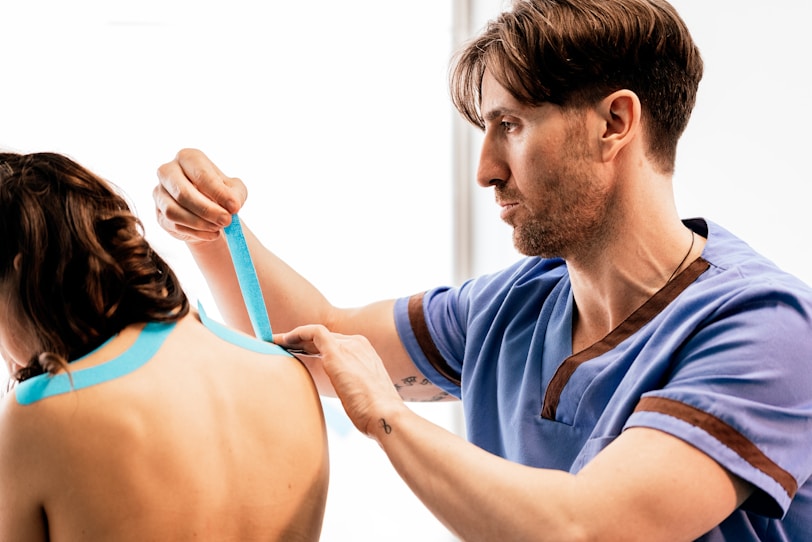
Taping is another adjunct therapy to provide support and protect or restrict movement of an injury.
Taping is another adjunct therapy to provide support and protect or restrict movement of an injury. If you need strapping due to previous or current injury to get you back on the field our physiotherapists can help you.
Taping a joint may provide
K-tape is an alternate therapeutic cotton-based tape that is used in pain and injury management. Taping provides support but doesn’t limit range of motion, is water-resistant and can stay on the skin for up to 5 days.
Taping is used to
At your first appointment, check in with our friendly staff and complete a new patient form.
During follow-up appointments, your physio will reassess your exercise program and apply hands-on techniques to aid your recovery.
Once you’re pain-free, your physio will provide a strength and conditioning program along with home exercises for complete rehabilitation to prevent future injuries.
It’s time to embrace a healthier lifestyle and rediscover the joy of being happy once more!
Most physiotherapy sessions last 30–60 minutes, depending on your treatment plan and needs. Your physiotherapist will make sure there’s enough time to assess, treat, and guide you through exercises.
Physiotherapy helps reduce pain, improve movement, restore strength, and prevent future injuries. It’s designed to get you back to your daily activities, sports, or work safely and effectively.
Your first session includes a full assessment of your condition, discussion of your goals, and creation of a personalised treatment plan. Your physiotherapist may use hands-on therapy, exercises, and other techniques to start your recovery.
Yes! Physiotherapy can help with back or neck pain, joint injuries, post-surgery rehab, sports injuries, arthritis, and other musculoskeletal conditions.
Frequency depends on your condition and goals. Many people start with weekly sessions, then gradually space them out as they improve. Your physiotherapist will monitor your progress and adjust your plan to ensure the best results.